The kitchen is the heart of the home, but it can also be the source of major clutter and frustration if storage is lacking. From overflowing cabinets to chaotic countertops, many of us struggle with making our kitchens organised and efficient. Fear not! Here are 15 smart kitchen storage ideas that will help you maximise space and keep everything in its place. These tips range from simple tweaks to more involved upgrades, but all are aimed at decluttering your kitchen and making cooking a pleasure again.
Let’s cook up some storage solutions!
Stop the utensil “junk drawer” madness.
Drawer dividers are essential for maintaining an orderly kitchen. Use adjustable inserts or custom cutlery trays to give each type of utensil (spoons, knives, spatulas, etc.) its own spot. This not only lets you find the peeler when you need it, but also fits more in a drawer by eliminating wasted space. As one kitchen organisation expert says, dividers “assign a specific spot for each utensil,” so everything has a home. You can get wood or plastic dividers, or even DIY with strips of balsa wood or acrylic. Don’t forget deeper drawers, divide them for things like Tupperware lids vs containers, so they don’t all mix together.
Make deep cabinets more accessible by adding pull-out shelves (sliding drawers) inside them.
Instead of blindly reaching into the back of a dark cabinet, a pull-out mechanism brings items out to you. This is especially great for lower cabinets or pantries. Put pots and pans on a sliding shelf, or canned goods on a rolling rack, and you’ll never have to unload half the cabinet to reach the item in the back. “Pull-out cabinets can truly change the way you store and access your cookware,” notes a kitchen blog. Many home stores sell retrofit kits, or you can have them built in. They maximise space (no dead zones in back) and save your back and knees from crouching.
Open shelving in the kitchen isn’t just trendy, it’s practical when used for everyday items.
Keeping frequently used plates, bowls, and cups on open shelves means easy grabbing and also encourages you to keep them neatly stacked. It also frees up closed cabinet space for other items you might want hidden. Ensure you only put items you use often (so they don’t gather dust) and that you don’t overload the shelf capacity. “Open shelving isn’t just a trend but a practical approach… It puts your most frequently used items like dishes and glasses within easy reach,” says a design expert.
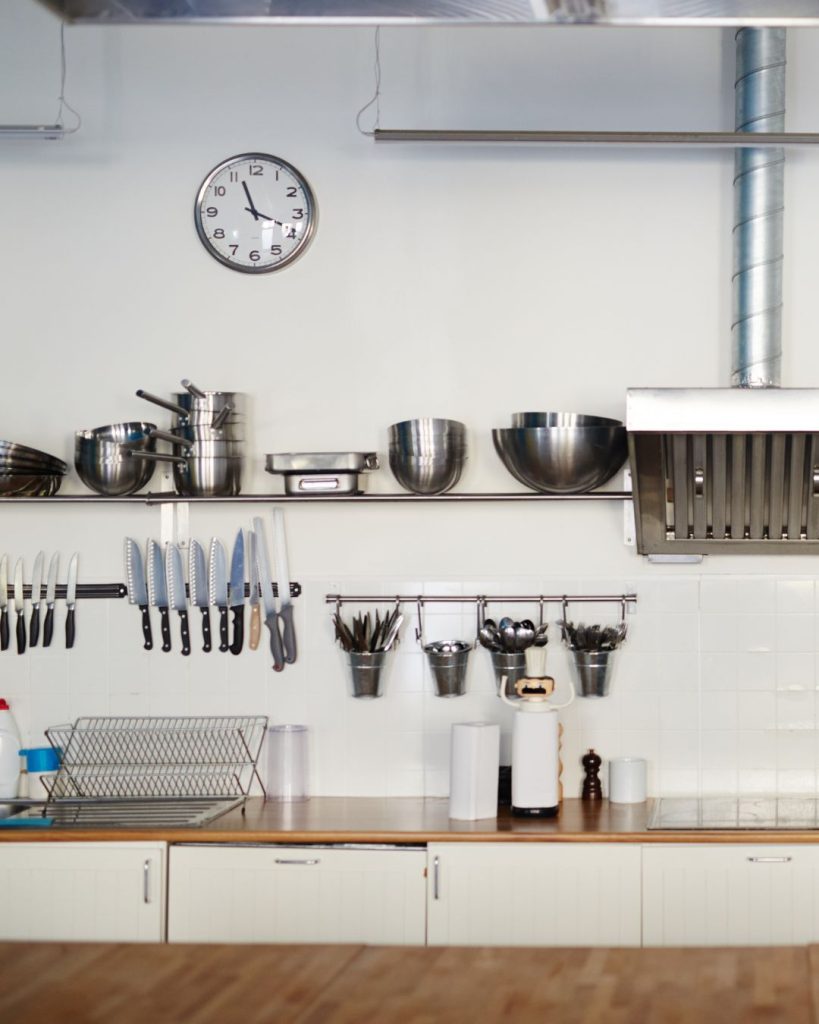
Channel Julia Child and mount a pegboard on a kitchen wall to hang pots, pans, and tools.
A pegboard with hooks lets you use vertical wall space for storage, freeing cabinets and giving a cool chef’s-kitchen vibe. Arrange your frequently used skillets, ladles, and colanders on the board, you’ll have quick access and an organised display. “Transforming a blank wall into versatile storage can be as simple as installing a pegboard,” one clever guide notes. If not a pegboard, consider wall-mounted pot racks or magnetic knife strips. The idea is to utilise walls so that bulky items don’t hog cabinet space. Even the sides of cabinets or ends of an island can host railings or hooks for hanging utensils and mugs.
A cluttered pantry can waste time and money (ever buy a spice you already had because you couldn’t find it?).
Invest in clear, airtight containers for dry goods like pasta, cereal, flour, and spices. Uniform containers not only save space by stacking but also keep food fresher and pests out. Label each container so you know what’s what and include expiration dates if transferring from original packaging. Group similar items together on pantry shelves (baking supplies, snacks, canned goods). Use shelf risers for canned goods so you can see the back row. A well-organised pantry means you can instantly scan and retrieve what you need and know when you’re running low. It’s an upfront effort with lasting benefits every mealtime.
The cabinet under the sink often becomes a cluttered catch-all of cleaning products.
Tame it by using a portable caddy or basket to contain bottles and sprays. A plastic caddy with a handle is great: fill it with your go-to cleaners, and you can lift the whole thing out when it’s chore time. It prevents tipping and leaking among a jumble of bottles. Also consider adding a tension rod under the sink to hang spray bottles by their triggers, another clever use of space that keeps them upright and accessible. By organising under the sink, you ensure that space isn’t wasted and you eliminate the hassle of digging through clutter to find the dish soap.
Spices can easily overrun a cabinet.
Give them a dedicated, organised home with a spice rack solution. Options include: a pull-out spice cabinet, a tiered spice shelf for a cabinet, a wall-mounted spice rack, or converting a shallow drawer into a spice drawer with angled racks. “Spices are the soul of your kitchen, but they can easily become a mess,” one organiser points out, a spice rack fixes that. Alphabetise or group by cuisine for bonus points. If using a cabinet door rack, ensure the door can still close properly. Having all spice jars visible at once (and labeled) means no more buying duplicates or letting herbs go stale at the back of the cupboard.
Don’t ignore the back of your cabinet doors, they’re prime storage real estate.
Install small hooks, racks, or clear pockets on the inside of doors to hold lightweight items. Ideas: a slim rack for cutting boards or pot lids, a small spice or oil rack, hooks for measuring spoons and cups, or a clipboard with your favorite recipes. You can also stick adhesive hooks to hang oven mitts or tea towels. One popular hack is mounting a magazine file to a cabinet door to store foil, plastic wrap, and zip-top bag boxes. It keeps them upright and out of the drawer. By leveraging door interiors, you gain storage that’s hidden yet handy, making every inch of your kitchen work harder.
Those flat items (baking sheets, cutting boards, muffin tins) often end up in a frustrating pile.
Insert vertical dividers in a cabinet or deep drawer to file them upright. You can buy a rack or simply use tension rods or DIY wooden slats as dividers. This way, you can pull one out without wrestling the whole stack. Many kitchen designers incorporate a narrow cabinet slot specifically for baking sheets, you can mimic that by partitioning part of an existing cabinet. Storing these items vertically not only saves space but also protects their coatings (no more scratching non-stick pans by stacking heavy stuff on them). It’s a simple change that offers a “why didn’t I do this sooner?” moment.
Free up drawer space and keep sharp knives safely stored by using a knife block or magnetic strip.
A knife block can sit on the counter or be an in-drawer version (with slots that go in a drawer) to organise knives without clutter. Alternatively, a wall-mounted magnetic knife strip keeps knives ready and looks stylish in a modern kitchen. Just be sure it’s strong and mounted securely to hold your knives. Storing knives properly not only clears space but also preserves their sharpness and keeps them out of harm’s way.
If you’re short on cabinet space for bulky pots and pans, consider a ceiling-mounted pot rack.
Hanging above an island or along the wall, a pot rack puts your cookware on display and within easy reach. It frees up an entire cabinet worth of space. “Installing a pot rack above your kitchen island frees up cabinet space and puts your beautiful cookware on display,” says a kitchen specialist. Choose a rack that suits your style, wrought iron for a classic look, stainless steel for modern. Ensure your ceiling or wall can support the weight and use proper anchors. Pots and pans are some of the bulkiest items; getting them out of cabinets opens up huge storage potential.
Make the most of limited cabinet space by using stackable storage.
For food storage containers, get nesting sets that all tuck into each other with one lid size, no more avalanche of mismatched tubs. For dishes and bowls, look for cabinet rack extenders (like mini shelves) that allow you to stack another layer safely. “Stackable storage solutions can be a game-changer in kitchens where space is at a premium,” notes an organiser. This applies to pantry items too: square or rectangular canisters make better use of shelf space than round ones because they sit flush against each other. By stacking and nesting, you eliminate wasted air space and can store more in the same area without it turning into chaos.
If you have tall shelves with unused headspace, add undershelf baskets.
These wire baskets hook onto an existing shelf and provide an extra layer below it, perfect for small items like tea towels, paper plates, spice packets, or cutting boards. It’s like adding another shelf without a renovation. They’re usually removable and inexpensive. Slide one under a pantry shelf to hold snacks, or under a cabinet shelf to hold mugs or saucers. This is especially useful in cabinets where you can’t adjust the shelf height and end up with half the space underutilised. Undershelf baskets make every inch count by filling in that gap.
Pot lids, travel mug lids, water bottle caps, these little things cause big clutter.
Use lid organisers or small bins to corral them. A pot lid rack (either standalone or mounted inside a door) will line up lids neatly. For food container lids, consider storing lids vertically in a magazine file or a dedicated shallow bin by size. Another trick: use a tension rod in a deep drawer to section off a part just for lids. Grouping small items in bins (like all cookie cutters in one box, all corn cob holders in another) also prevents them from scattering in drawers.
Avoid countertop clutter by giving bulky items a specific home.
Dedicate a shelf for your cookbooks rather than scattering them. Maybe it’s a couple of books on an open shelf or a section in a cabinet, keeping them together looks nicer and you always know where to find recipe inspiration. Likewise, think about your appliances: if you have a bread maker, Instant Pot, blender, etc., designate a part of a pantry or cabinet just for appliances. Some people create an “appliance garage”, a section of counter with a roll-up door to hide toasters and mixers. If that’s not an option, a lower cabinet with pull-out for appliances works.
An organised kitchen is within reach with these storage ideas. By implementing even a few of them, like adding drawer dividers, using your cabinet doors, or installing a pull-out shelf, you’ll notice a huge difference in how your kitchen functions. Less time spent searching for items or shuffling clutter means more time enjoying cooking and dining. A well-organised kitchen can truly spark joy (as Marie Kondo would say) every time you step in to whip up a meal. So go ahead, pick an idea or two from this list, and transform your kitchen into a model of efficiency and order!