If White City were a person, it would be the friend who disappeared for a while and came back with a new haircut, a better wardrobe, and a calendar full of plans.
You remember the old version. You don’t dislike the new one. You’re slightly suspicious, because it’s London and change always comes with a bill. Still, you can’t deny it. The area has shifted.
So here’s a local-ish, slightly nosy guide to White City as it is right now, plus the one thing nobody talks about until they need it: where to put your stuff when your life grows faster than your square footage.
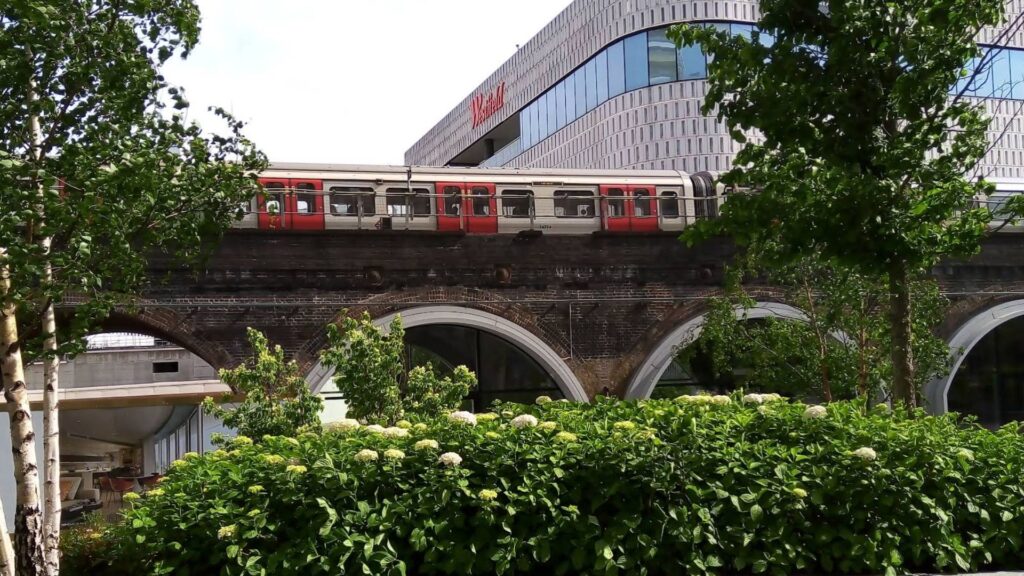
Image Source: https://whitecityplace.com/
White City In The Morning: Commuters, Coffee, And The Pram Ballet
Morning White City has two speeds.
There’s the rush: people heading to the tube with purpose, walking like the train will personally take offence if they slow down.
Then there’s the calm rush: parents moving with prams, one hand on a coffee, the other hand on the steering mechanism that prams apparently require now. This is a daily ballet at crossings, lifts, and shop entrances. Everyone knows the rules without saying them out loud.
This is also when you notice the small-flat reality. People are out early partly because the flat gets busy. When home doubles as office, nursery, and storage cupboard, leaving the house becomes a form of relief.
That’s why White City’s amenities feel so attractive. They let you be elsewhere without travelling far. A short walk gives you a change of scene.
But even if you spend half your life outside, the flat is still where the stuff lives.
Lunchtime White city: Work-From-Home Without The Chaos
White City has become friendly to the work-from-home crowd. You can see it in the middle-of-the-day laptop faces and the quiet confidence of people who know where to sit without looking like they’re taking up space.
If your flat is small, a decent place to sit for an hour matters. It’s not a luxury. It’s survival.
The other side of WFH is that your home slowly fills up with the equipment of work. A desk, a chair, boxes of paperwork you swear you’ll sort, spare monitors, cables that reproduce.
And because you see those things all the time, they start to feel like “the house”. The clutter becomes normal. That’s when people stop noticing how much space they’ve lost.
A simple trick, if you’re the type who likes small interventions: pick one corner you want back. Not the whole flat. One corner. Your desk corner, your hallway, the cupboard you can’t close. Then solve for that corner.
Often, the solution is not buying more organisers. It’s getting the bulky, occasional things out of the home.
That’s where storage near White City becomes practical rather than theoretical.
Shopping White City: The Moment You Create The Problem
Westfield is brilliant at what it does. You go in for socks. You leave with socks, a plant, a new pan, and a bag that contains something you can’t explain to your bank app.
Shopping has a hidden second stage in a small flat: “Where is this going to live?”
In bigger homes, the answer is “somewhere”. In a White City flat, the answer is “in the way”.
That’s why a local “spare room” solution makes sense here. Self storage White City isn’t about hoarding. It’s about not turning your living room into a logistics centre.
If you’re in the middle of renovating, it becomes even more obvious. Renovations don’t just change the look of a place. They temporarily destroy your ability to live in it. Boxes everywhere. Furniture shifted into the wrong rooms. Half your life stacked against a wall.
A nearby storage unit is basically a pressure valve. It lets you continue living while the chaos happens.
Evening White City: The Neighbourhood Starts To Feel Like Itself
In the evening, the area does something that makes people talk about it with affection. It stops being a place you pass through and becomes a place you spend time in.
You see couples walking home with shopping bags. You see people meeting friends. You see families doing the “one last errand” walk. You see that mix of residents and visitors that means a neighbourhood has started to develop a social life.
This is also when the identity side kicks in. People want their homes to reflect the life they’re building. They care about interiors, not in a glossy-magazine way, but in a “I want my living room to feel calm” way.
Clutter is the enemy of that. It makes even a nice flat feel smaller and messier than it needs to.
Which brings us to the part of modern living nobody posts on Instagram.
The Stuff That Swallows Up The Space In Your Home
There are a few classics, the pushchair that fits through a door but not into a cupboard. The travel suitcase that lives behind the sofa. The winter coats that migrate across chairs. The sports kit that’s aspirational most days and enormous every day. The bike that you love and resent in equal measure. The baby stuff that arrives fast and leaves slowly. The “we might need this” pile that never gets tested, because the pile itself blocks the path to testing it.
None of these are moral failings. They’re normal. What’s not normal is pretending you can solve them with more willpower.
The most human solution is to change the environment, not your personality.
The Amenity Gap: Storage That Feels Like Part Of Home
If you live in White City or nearby W12, the ideal storage doesn’t feel like “going to storage”. It feels like popping into the spare room.
That’s the difference between distant storage and local storage. Distant storage becomes a Saturday project. Local storage becomes a habit.
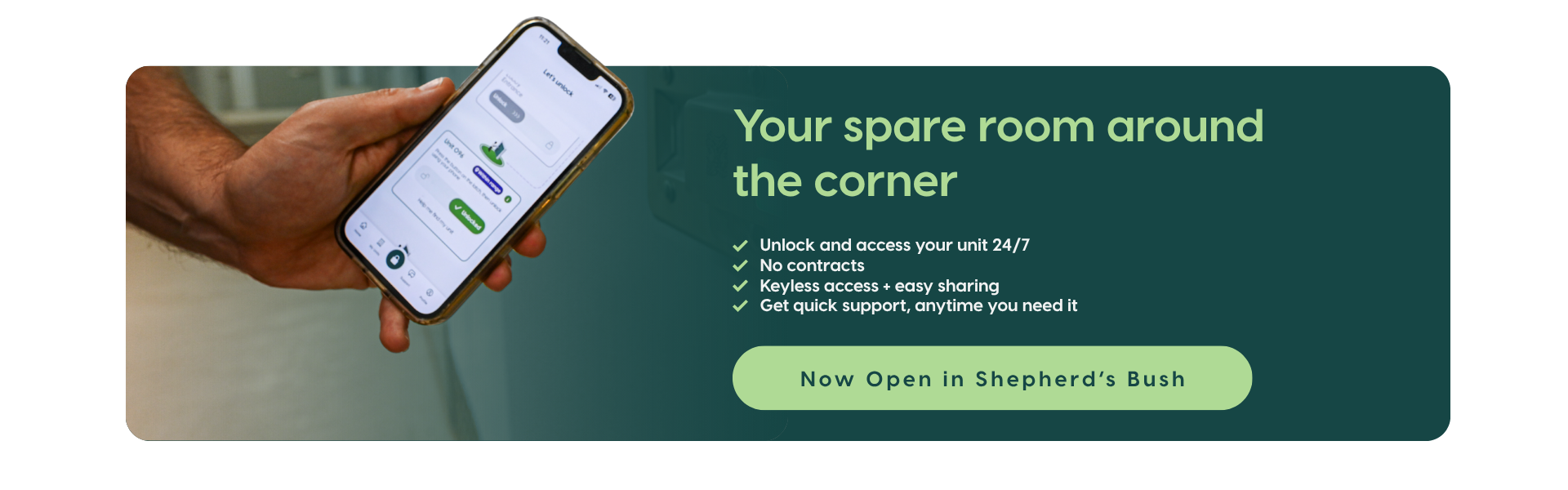
Lockit Local Shepherd’s Bush is designed around that local idea. The brand line, “your spare room around the corner”, fits White City because the area is full of people living in well-designed homes that are short on square footage.
And the two biggest emotional objections you mentioned, fear and loss of control, are solved by making the whole experience feel simple, clean, and close.
If you can get to your things easily, you don’t feel like you’ve lost them. If the place feels looked after, you don’t imagine your belongings in a damp mystery box. If you can start small, you don’t feel like you’re making a big commitment.
That last point matters. Most people don’t need a huge unit. Your target mix has lots of small units for a reason. Many households are one pram and a few boxes away from a calmer flat.
How To Use Storage Without Becoming “A Storage Person”
This is the bit people worry about, so let’s be plain about it.
You don’t need to become the type of person who “uses storage”. You can use it like a utility.
Pick one category that is ruining your space right now.
Pram. Bike. Suitcases. Renovation boxes. Seasonal clothes. Side-hustle stock.
Move that out. See how the flat feels for a week.
If the home feels better, you’ve found your answer. If it doesn’t, you can change the plan.
That’s it. No identity crisis required.
Why This Is Good For The Neighbourhood, Not Just The Flat
There’s a community effect to this that people miss. When homes feel less cramped, people host more. They invite friends over. They stay longer. They feel less stressed. They spend less time apologising for mess and more time enjoying the area they live in.
White City’s glow-up is partly about creating places people want to spend time. The home is part of that ecosystem.
If White City is becoming a place you choose, it makes sense to have the practical “resident amenities” that support that choice, even if they aren’t glamorous.
Storage near White City is one of those unglamorous things that improves daily life.
And daily life is the only kind that really counts.