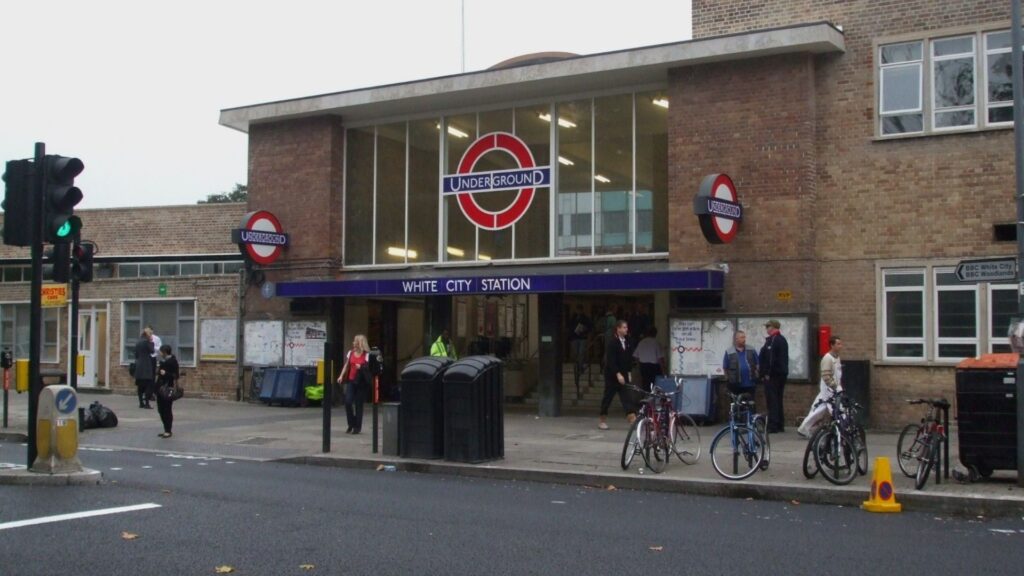
White City has always had a slightly sci-fi name for somewhere that, for years, felt more “practical West London” than “destination”. If you grew up nearby, you might still picture the BBC, the old studio energy, the purposeful walk from the tube to wherever you were going, and a lot of people passing through rather than hanging about.
Now, people hang about.
You see it the moment you step out at White City or Shepherd’s Bush. The footfall has that new-neighbourhood mix: residents with prams and coffee cups, people in gym kits who look like they’re on a schedule, shoppers who came for one thing and will leave with three, and the quiet army of locals who treat Westfield like an extension of their kitchen.
The cranes and new buildings have done the obvious work. The less obvious work is cultural. White City has started to feel like a place you could choose, not just a place you end up near because the tube line makes sense.
It also has a very modern West London problem.
There’s not enough space inside the flats for the life people are trying to live.
The Community That’s Learning to Lounge
White City’s current vibe is “I can do everything within a short walk, then I can go home and pretend I’m not in London for ten minutes”.
You’ve got the big retail gravity of Westfield. You’ve got a growing set of places that are clearly built for lingering rather than rushing. You’ve got that mix of old and new where you can go from a glass lobby to a row of older terraces in a few minutes and it somehow works.
It’s also a neighbourhood that feels unusually friendly for somewhere with so much new build development. People are out and about. People are moving. People are doing the everyday bits of life in public. That sounds small, but it’s how a place stops being a postcode and starts being a community.
And community, in London, creates a certain kind of lifestyle ambition. You start thinking, “We could host.” Or, “We could finally get that buggy that folds better.” Or, “Maybe I do need a desk that isn’t the end of the dining table.” Or, “If my boyfriend is going to keep playing golf, those clubs need to live somewhere that isn’t next to the hoover.”
That’s the thing. White City is making it easier to want stuff. It’s also making it harder to keep it.
The Flat Reality: You Don’t Need More Things, You Need More Room
Most people in White City aren’t waking up craving self storage. They wake up craving breathing space.
They want the home to feel calm. They want the flat to look like an adult lives there. They want that pesky spare duvet to stop falling out of the cupboard. They want to stop moving the same three objects around the room like they’re playing a low-budget version of Tetris.
If you live in a flat, you know the pattern. Life arrives in phases:
A baby phase. A renovation phase. A “we both work from home now” phase. A “we’ve become people who do sports” phase. A “we’re downsizing but refusing to accept it emotionally” phase.
Each phase comes with equipment. Each piece of equipment comes with guilt when it’s in the way. That guilt is the real cost. Not just money, but the constant, low-level sense that the flat is winning.
White City’s new amenities solve a lot. They solve convenience. They solve entertainment. They solve a bit of status, if we’re honest. What they don’t solve is where the stuff goes when you’re trying to live nicely in a smaller footprint.
The Missing Amenity: Somewhere Close To Put The “Not Daily” Things
When people talk about amenities, they mean gyms, lounges, roof terraces, co-working, parcel rooms. Useful, sure.
But there’s a quieter amenity that changes your day more than a rooftop ever will: having the home feel bigger without moving.
That’s where storage near White City turns from “random service I never thought about” into “that one practical hack that makes life easier”.
The trick is that storage only works when it’s close enough to feel like part of home. If it’s a long drive away, it becomes a project. Projects get postponed until your cupboards are basically holding a protest.
If it’s around the corner, it behaves like a spare room. You stop seeing it as “sending things away” and start seeing it as “making space”.
That’s exactly Lockit Local’s mission: your spare room around the corner. For White City and W12, that’s not a slogan. It’s the whole point.
What People In White City Actually Store (And Why It Isn’t Sad)
Let’s retire the idea that storage is for people who are in trouble. Most of it is plain life.
Prams and buggies that are brilliant outdoors and absurd indoors.
Suitcases that only get used on holiday, but live in the hallway twelve months a year.
Winter coats that deserve a hibernation spot.
Bikes that are too precious to leave outside and too awkward to keep inside.
Golf clubs, if you’re that way inclined, that take up the same amount of space as a small, judgemental flatmate.
Renovation boxes when you’re halfway through making the home nicer, which is usually the moment the home becomes less liveable.
Stock for side-hustles. White City has plenty of that energy.
None of this is dramatic. It’s just the difference between a flat that feels like a place you rest and a flat that feels like a corridor you store things in.
Why “Around The Corner” Matters More Than People Think
There’s a psychological quirk here. People don’t like losing control of their stuff. They imagine storage as a black hole. Once it goes in, it disappears into a damp maze, never to be seen again.
That fear keeps people stuck.
So the job of a modern, local storage brand is not to shout “secure” louder. It’s to make the whole thing feel ordinary, simple, and close.
If you can walk to it. If you can access it easily. If it looks clean and well-lit. If you can change unit size without a hassle. If you can cancel without a drama. Then it stops feeling like you’re handing your life over to an industrial warehouse.
It starts feeling like you’re buying back your hallway.
The White City Test: Would You Pay For A Better Home Feeling?
Here’s a small thought experiment that tends to cut through the noise.
If someone offered you an extra cupboard in your flat, or a tiny spare room, what would you pay?
Now notice how much space you’re currently paying for, in rent, that is being used to store items you touch once a month.
In White City, where space is expensive and new life stages arrive quickly, storage near White City becomes less like an expense and more like swapping one kind of cost for another. You’re replacing cramped living with a bit of monthly calm.
And calm is a lifestyle upgrade people actually feel.
Where Lockit Local Fits In, Without Pretending It’s The Hero Of The Story
Lockit Local isn’t the new cafe, the new rooftop, the new place to be seen. It’s not meant to be.
It’s the kind of amenity you notice when you get home and the place looks better because the bulky things have stopped living in the wrong places.
If you live in White City Living or nearby, it’s an easy add-on to the modern London set-up: keep the flat for daily life, keep the “not daily” things close by, and stop letting your home become a storage unit.
Which is the mildly ironic point.
People don’t want storage. They want the home to feel like it’s working.
If you’re searching for self storage White City because you’ve hit that moment where the buggy, the boxes, the sports kit, and the “we might need this one day” pile have formed a small government, you’re not alone.
You’re just living in London in 2026.